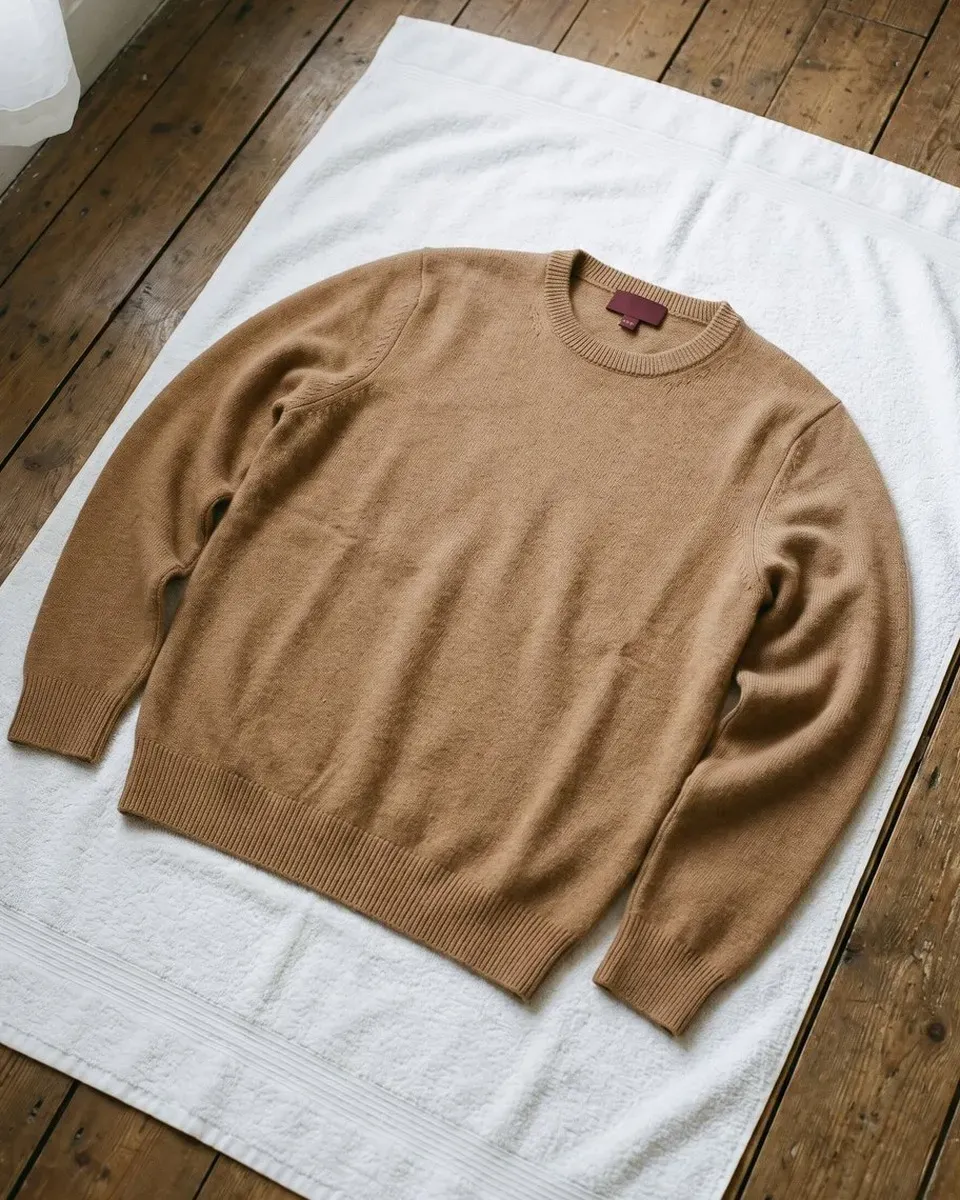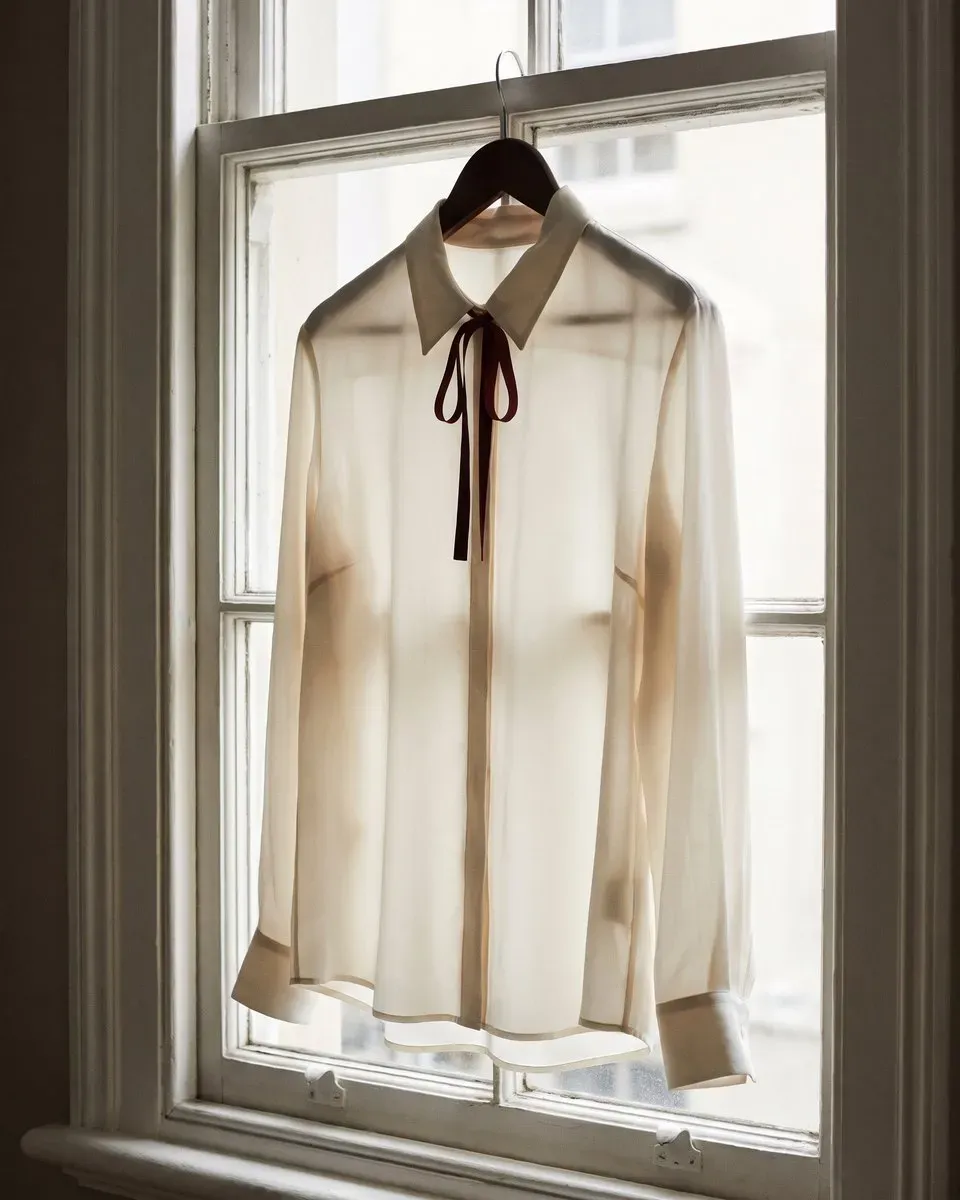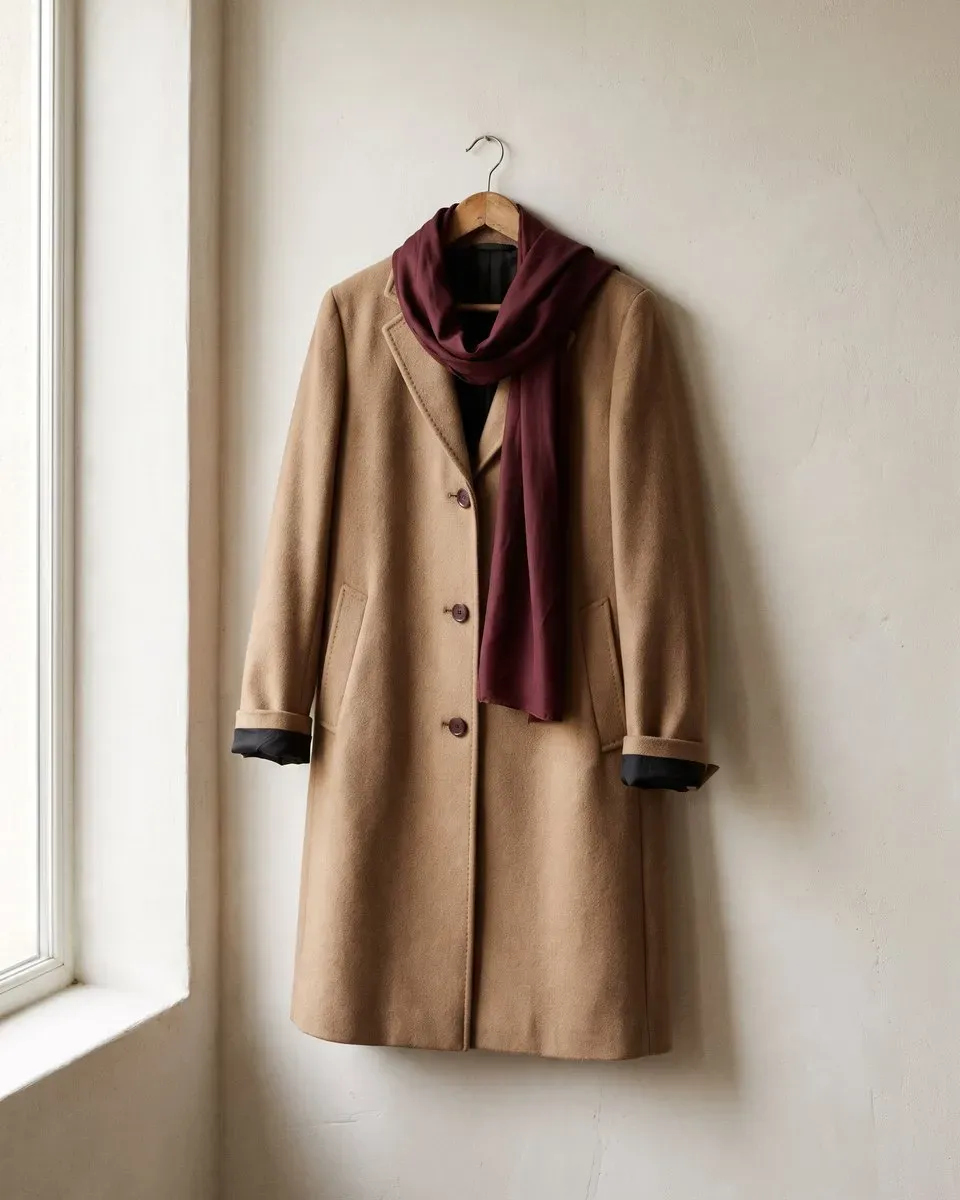
The winter collection began in the mills, long before anything was cut. We spent the early part of the year visiting spinners and weavers, looking at cloth in the grey and in the finished piece, and choosing the weights we wanted to live with through the cold months. We looked for cloth that keeps its surface through a winter of wear and softens rather than fades.
Cloth from the mills
The wool comes from a small number of mills in the Scottish Borders, where cloth is still woven on looms that have run for decades. The weight is steady and the finish is dry rather than glossy, which suits the way the collection is meant to be worn. The knits come from northern Portugal, from a mill that has worked with fine yarns for a long time. We choose the cloth first and design around it, because a good cloth will carry a simple shape.
Five colours
The palette is bone, chalk, camel, chocolate and black, with claret as the only strong colour. Bone and chalk sit close to the skin and to daylight. Camel and chocolate give the collection its warmth. Black holds the line and makes the lighter tones look quieter than they would alone. Claret appears once or twice, never as a stripe or a pattern, only as a single piece that gives the rest of the wardrobe something to answer to.
Cut in Clerkenwell
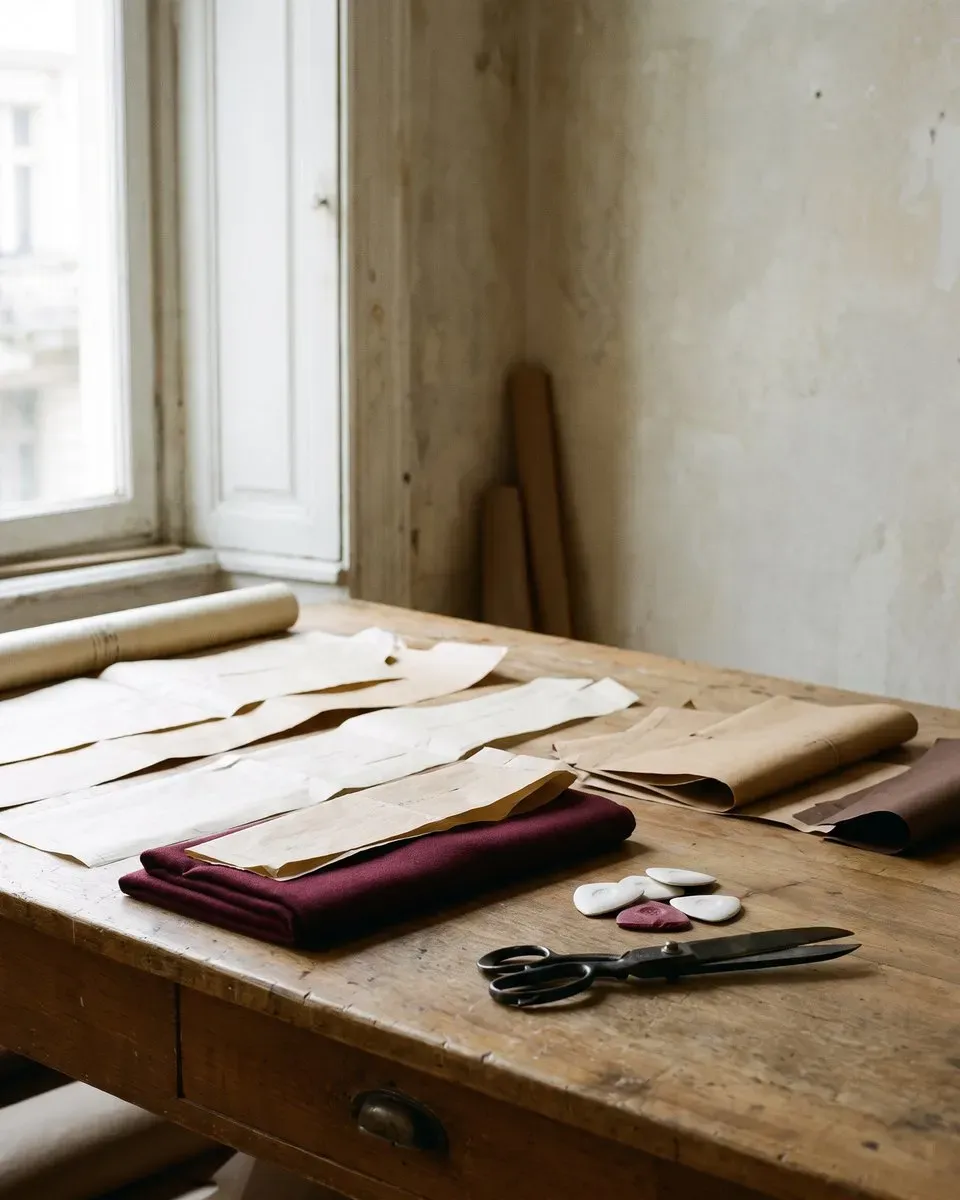
Every piece was cut in our studio in Clerkenwell, on a long table by the window. The patterns were developed on the table over several months, first in paper and then in cloth, until the shoulder and the sleeve fell the way we wanted. Cutting in the studio keeps the runs small and lets us change a line between batches without losing the shape of the collection.
Made in London and beyond
The tailoring was made in London, close enough that we could visit the workrooms through production. The knitwear was made in northern Portugal, and the cloth itself was woven in the Scottish Borders. Three places, one collection, and a short distance between the people who made it and the people who wear it.