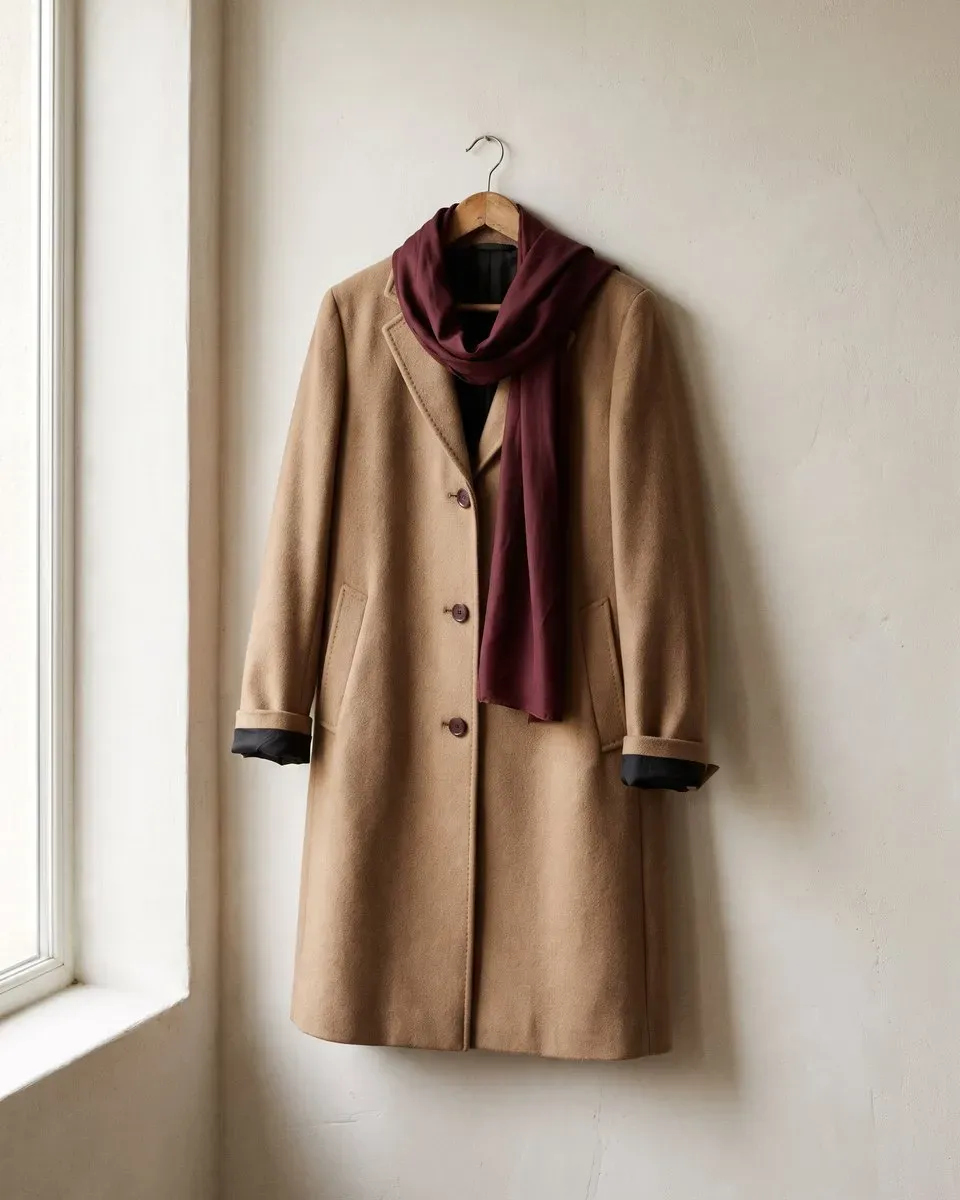
A coat is the piece you wear most and think about least. It meets the weather, the walk to the station and the room you arrive in. One good coat will do more work than several indifferent ones, and it will look better as it ages. The cloth, the lining and the way it hangs all matter more than the details you notice in a shop.
Why weight matters
Cloth weight is measured in grams per square metre. A light coating of around 400g holds a clean line and suits a mild autumn. A mid weight of 600g to 700g is the useful middle, warm without bulk. Above 800g the cloth has real body and shields against wind, at the cost of some ease through the shoulder. The weight should match the weather you actually have, not the weather you imagine.
Why we half-line
We half-line our coats through the back and shoulders, leaving the sleeves and lower fronts unlined. A full lining adds warmth and slides easily over a jacket, but it can make the coat feel stiff and traps heat in a way that is unwelcome indoors, especially on a train or in a warm room. A half lining is also easier to replace if it wears through at the neck. A half lining keeps the coat light, lets the cloth move and leaves the inside clean where it shows. It also leaves less to wear out.
Brushing and hanging
Brush a wool coat after wearing it, always in one direction with a soft clothes brush. This lifts dust from the surface before it works into the fibres. Hang the coat on a broad wooden hanger so the shoulders keep their shape, and leave space either side so the cloth can breathe. Empty the pockets at the end of the day. A coat that is rested between wears will last longer than one that is worn every day without pause.
Repairing rather than replacing
Small repairs are worth making. A loose button, a worn cuff edge or a lining that has begun to part can all be put right. Keep the spare button that comes with the coat and mend the seam before it opens further. A coat that is looked after will hold its shape for many winters.